Why Leather Has Been Used for 7,000+ Years: The Material Science They Don’t Teach You (But Should)

By Curtis Matsko, Founder of Portland Leather Goods
Let me tell you a secret most people never hear: leather isn’t popular because it’s “classic.” Leather has lasted 7,000+ years because it’s a freak of nature—in the best way possible. Before anyone had supply chains, sustainability reports, or influencers arguing about real leather vs faux leather, early humans already figured it out. They didn’t have TikTok, but they had instincts.
And those instincts pointed straight at full-grain leather.
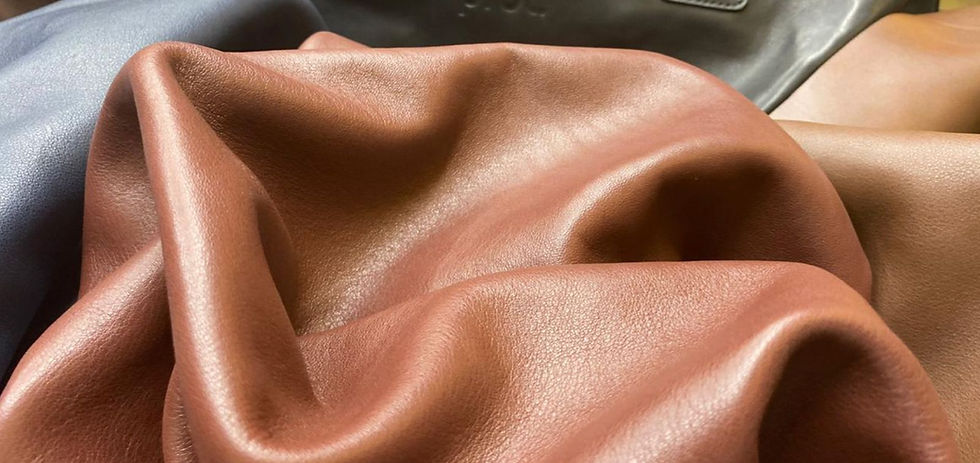
And honestly? They were right.
I’ve spent years in tanneries touching hides, asking irritating questions, and annoying more than one leather chemist. And the deeper you go, the clearer it becomes: leather works because nature built the perfect material long before we tried manufacturing fake ones.
So let’s break it down—material science, real talk, and zero marketing fluff.
Full-Grain Leather: Nature’s Original Supermaterial
Full-grain leather is the top layer of the hide—dense fibers, natural grain, unbelievable durability. It’s the gold standard, the premium cut, the good stuff. And it’s the reason a full-grain leather bag from 2025 can outlive a synthetic one from last Tuesday.
Why?
Because those collagen fibers interlock like rebar in concrete. That structure gives full-grain leather:
Extreme durability (it resists stretching, tearing, and abrasion)
Natural breathability (no clammy plastic feeling)
A patina that tells your story (faux leather can’t fake this—trust me, they try)
Long-term repairability (you can recondition, re-stitch, re-oil—try that with plastic)
If you want longevity, this is the top of the mountain.
Real Leather vs Faux Leather: The Debate Nobody Wants to Have
I know “vegan leather” sounds wholesome. It also sounds like it grew on a happy little tree. But let’s get honest: faux leather is usually polyurethane (PU) or PVC—plastic.
And here’s the scientific reality (not the marketing version):
Faux leather does not breathe
It cracks, peels, and flakes
It cannot be meaningfully repaired
It sheds microplastics and nanoplastics into air and water
It lasts hundreds of years in a landfill—even if it only lasted six months on your shoulder
Meanwhile, real leather—especially full-grain and vegetable-tanned leather—breaks in, gets better, ages with you, and biodegrades in its natural state.
I’m not here to shame anyone’s choices. I just think people deserve the actual science, not marketing buzzwords.
Why Humans Chose Leather 7,000 Years Ago (and Still Do)
Long before the phrase “material sustainability” existed, leather was the solution. It was flexible, breathable, strong, and—most importantly—repairable. You could use one item for years, fix it, pass it down, and keep it moving.
Here’s the part most people don’t know:
Leather is not just “durable.” It’s a natural composite material. The hide is a 3D structure of branching collagen fibers arranged in every direction—top to bottom, side to side, and diagonally. It’s like nature invented carbon fiber thousands of years early.
No synthetic leather has ever successfully recreated that.
Leather Durability: The More You Use It, the Better It Gets
One of the magical things about high-quality leather—top-grain, full-grain, and even certain nubucks—is that it strengthens as it forms to your life. Oils, UV, movement, friction… they don’t break it. They build it.
With synthetics, aging means failure.
With real leather, aging means character.
Your bag ends up looking like it’s lived a life—not like it’s dying.
Why Leather Is Still a Sustainable Choice
Let’s talk about something leather critics rarely acknowledge: hides are a by-product of the food industry. If leather makers didn’t use them, billions of pounds of hides would be burned or landfilled.
Transforming waste into a decade-long product is one of the most underrated forms of sustainability.
And when your leather comes from responsible, audited tanneries—like the Leather Working Group (LWG) certified ones we partner with—it means:
Better water and chemical management
Safer tanning processes
Traceability
Lower environmental impact
It’s not perfect. Nothing is. But it’s honest, accountable, and constantly improving.
The Part I Love Most: Leather Grows With You
Every bag we make at Portland Leather Goods is meant to be:
Used daily
Loved deeply
Repaired when needed
And passed on someday
Because leather is more than a material. It’s a companion. It’s a witness. It’s a diary you don’t have to write in—life writes on it for you.
Full-grain leather doesn’t hide your story.
It records it.
That’s why, in a world full of plastic look-alikes, leather remains undefeated. Not for nostalgia. Not for aesthetics. But because nature engineered a material so brilliant that 7,000 years later, we still haven’t topped it.
And trust me—people have tried.


Comentarios